
See the businesses and changes shaping your region.

Bring company records, regional changes, and official indicators into one maintained workspace so your team can discover more of the local economy and focus the next action.

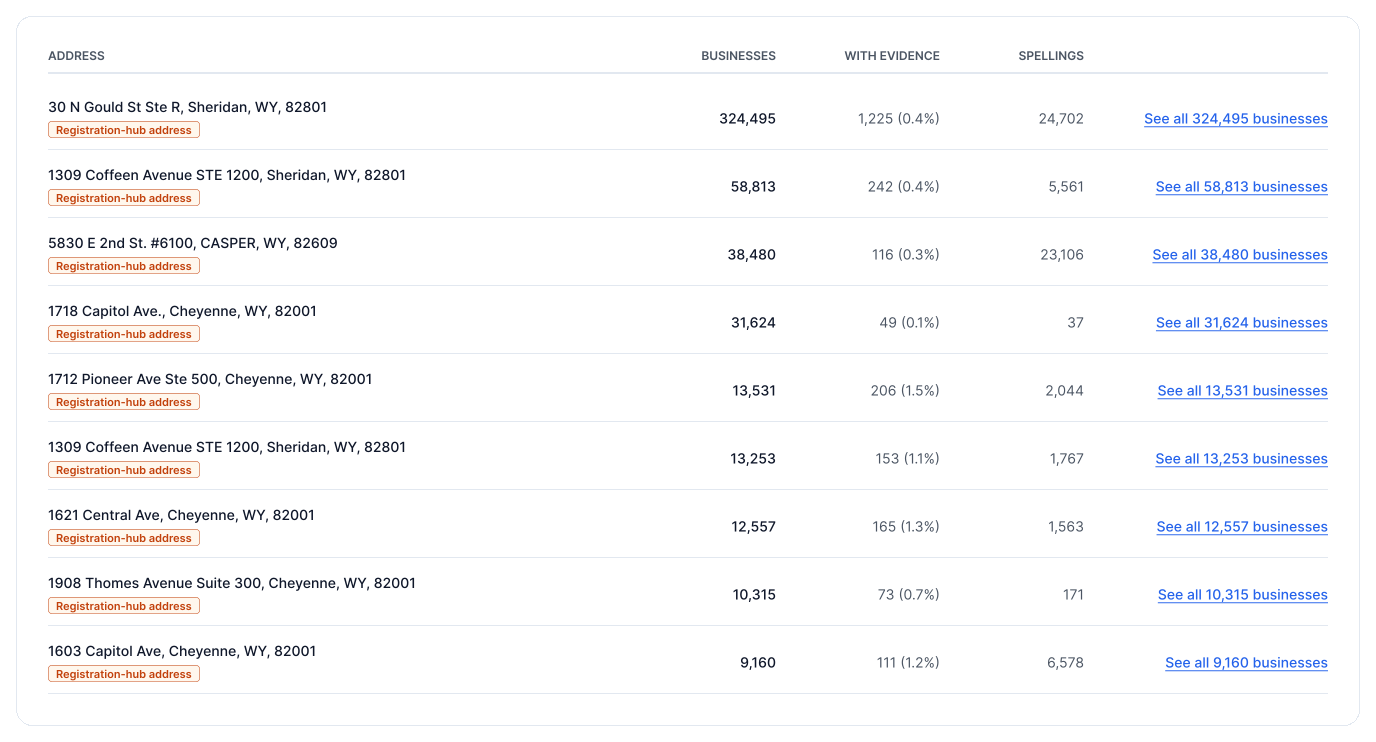
EcosAtlas registration-hub analysis comparing addresses, business counts, evidence coverage, and spelling variants
Review how registration addresses connect to business populations and supporting evidence.

Discover more of the businesses already in your region.

Search across sectors, capabilities, designations, and places to see companies your team knows and others that may not appear in familiar lists or networks.

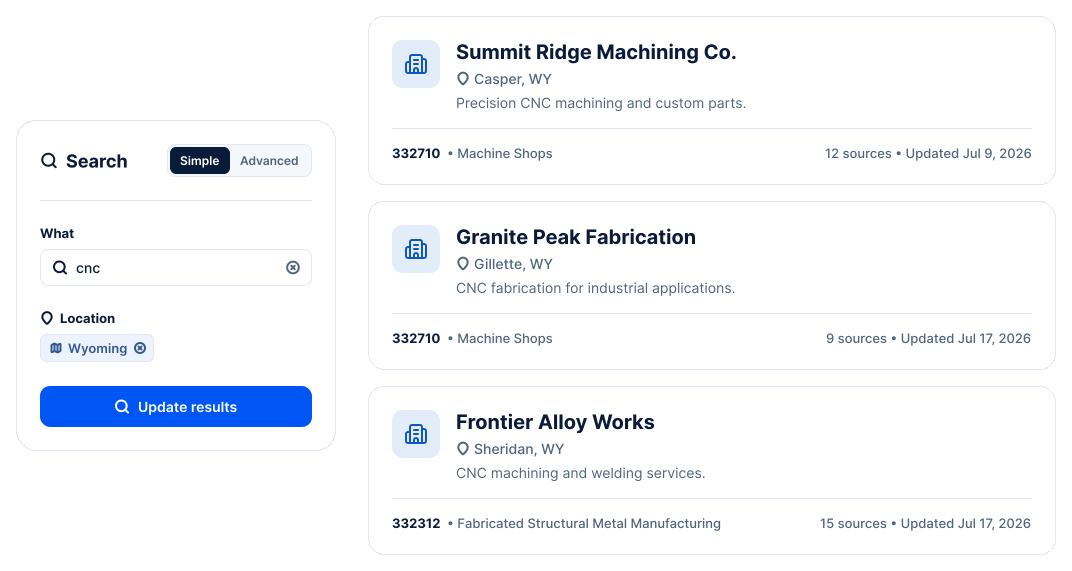
For a regional manufacturing study, start with the processes and materials of interest, then review where the candidate businesses operate.

EcosAtlas Business Explorer filtered for CNC companies in Wyoming with three business results
Search by capability and place, then open the business record behind each result.

Understand each business before you act.

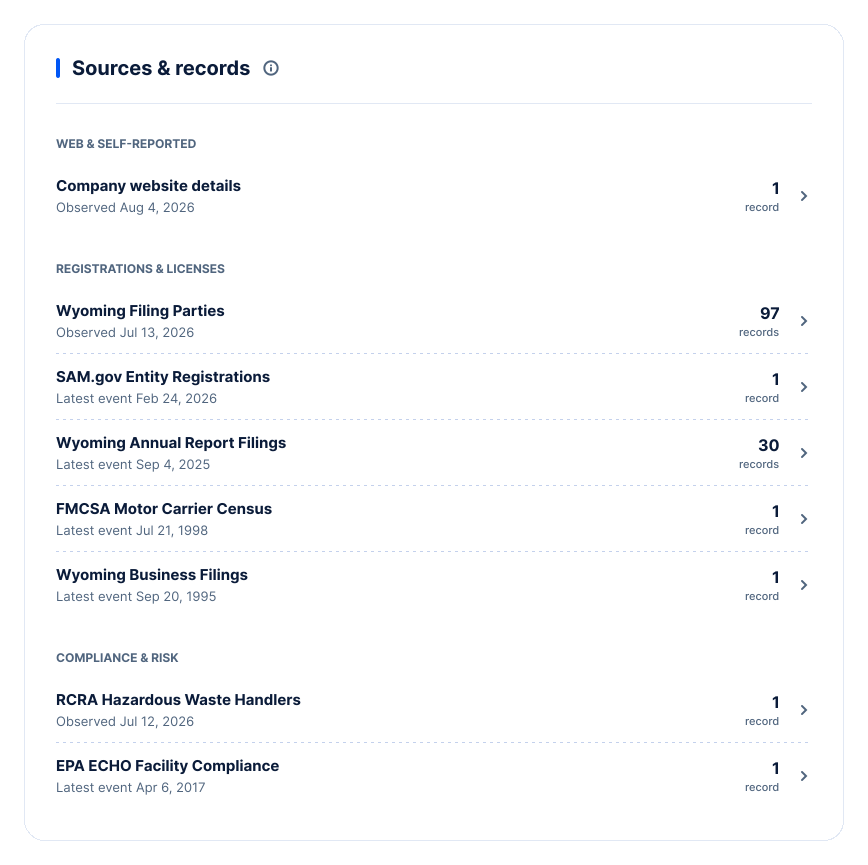
Open a company profile with available identity, locations, classifications, capabilities, activity, operating-status evidence, and history. See the source and observation date behind important details as you prepare outreach and analysis.

EcosAtlas company evidence grouped by web, self-reported, registration, license, compliance, and risk sources
Company evidence keeps source systems, record counts, and observation dates in view.

Turn the regional picture into focused work.

Keep business discovery, supporting context, and the regional decisions they inform together in one shared workflow.

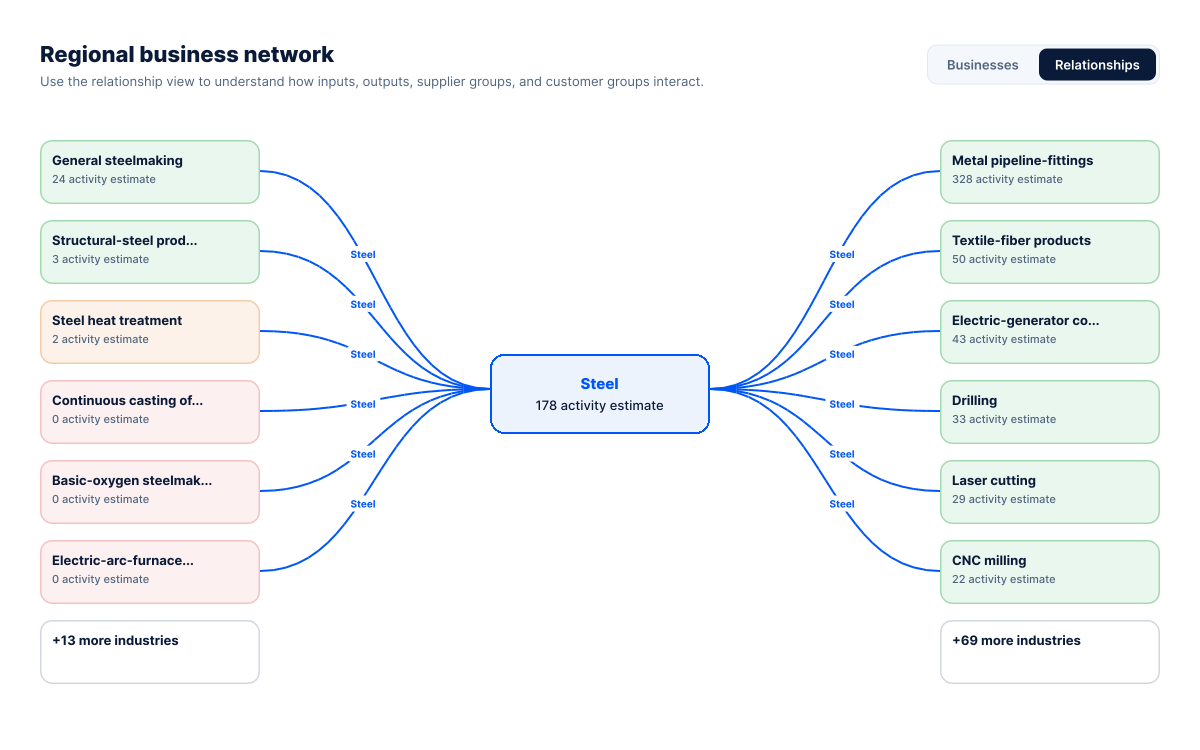
EcosAtlas supply-chain map connecting steel inputs, processes, outputs, and related industries
Trace possible supply-chain relationships across inputs, processes, outputs, and industries.

Prioritize outreach from business changes

A federal award, a reported employment change, or a registration event can provide a starting point for retention and expansion research. Inspect the source and company context to decide what the next conversation should address.

Explore regional supply-chain possibilities

Relate company capabilities to the materials, processes, and outputs an industry needs. Investigate potential local suppliers and capability questions that could inform recruitment or supplier development.

Answer regional questions with evidence

Combine company and facility locations with available official industry and workforce measures for a regional brief. Keep recorded company activity distinct from statistical context when preparing board, stakeholder, and program conversations.

Bring your region into clearer view.

Start with a geography and a retention, expansion, recruitment, or supply-chain question. We will shape the walkthrough around the decisions your team is making.